Introduction
Many business owners we talk to feel overwhelmed by their "online presence." They hear they need to be on every platform, post content daily, and run complex ad campaigns. This often leads to scattered efforts, a drained marketing budget, and very few real results.
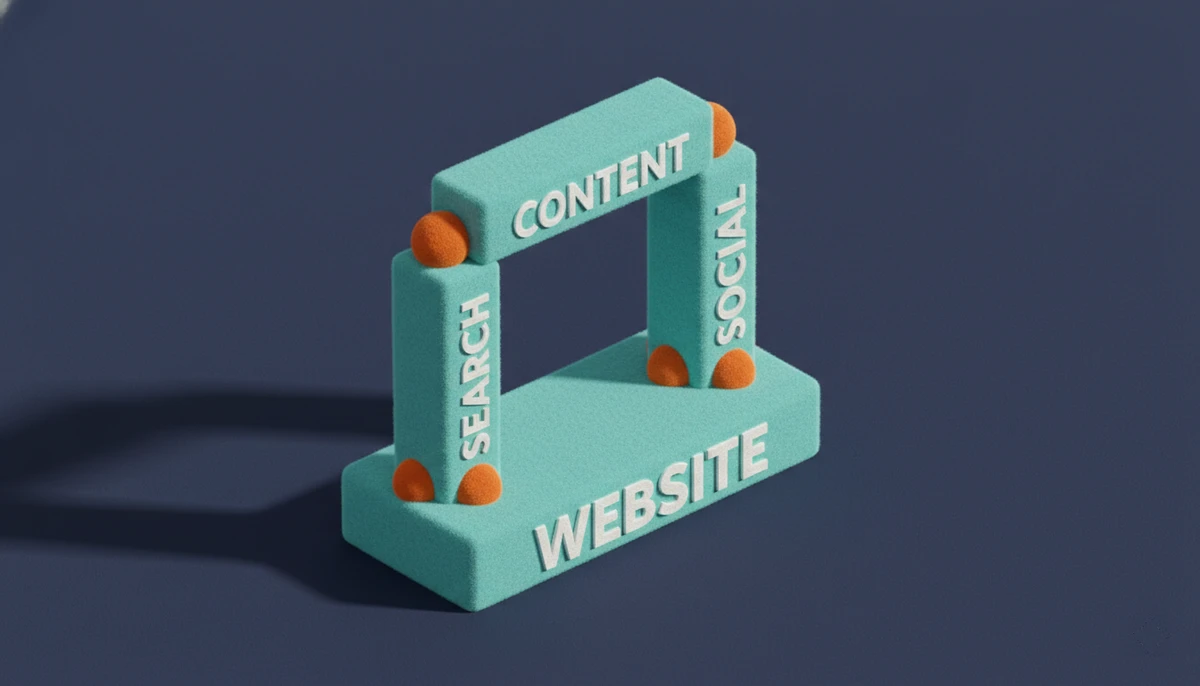
The practical approach isn't about doing everything. It's about building a strong, focused system that reliably brings in customers. Think of it like constructing a building: you need a solid foundation, strong pillars, and a system that connects it all together.
In our work with small businesses, we've seen that a successful online presence has three core parts. Get these right, and you'll have a system that works harder than being busy on every social platform.
1. Start with Your Foundation: Your Business Website
Your website is the single most important part of your online presence. It's the one digital asset you completely own and control, unlike social media profiles, which change based on platform algorithms.
The problem is that many business websites don't function as business tools. They might look nice, but they're slow, confusing, or don't guide visitors to take action. This is where effective web development makes the difference between a digital brochure and a business asset.
A high-performing website gets three things right:
Clarity: Within five seconds, a new visitor should understand exactly what your business does and who you serve.
Performance: The site must load quickly. Research shows that as page load time increases from 1 to 3 seconds, the probability of a visitor leaving increases by 32%. With over 60% of all web traffic coming from mobile devices, this is critical.
A Clear Next Step: What is the single most important action you want a visitor to take? "Contact Us," "Request a Quote," "Buy Now"? This call-to-action needs to be obvious and easy to find.
Your First Practical Step: Open your website on your phone. Can you immediately find your phone number? Does the page load in under 3 seconds? If not, start there. Fixing these two issues often has a greater impact than any other marketing effort.
2. Choose Your Pillars: Where Your Customers Actually Are
Once your website foundation is solid, you need to build paths that lead customers to it. This is where most businesses get overwhelmed. The goal isn't to be everywhere. It's to be where your customers are looking for you.
For most small businesses, this means focusing on two main pillars:
Pillar 1: Search Engines
This is essential for most businesses. Research shows that 46% of all Google searches have local intent, meaning people are looking for businesses near them. When someone searches Google for a specific service, they have an immediate need.
The entire goal of effective SEO is to make your business visible during these critical moments when potential customers are actively looking for what you offer.
Pillar 2: One Key Social Platform
You do not need to be on every platform. Choose one where your ideal customers spend their time and commit to it. Research shows that one in three consumers discovered a new product or brand through social media in the past year.
- If you're a B2B consultant, that's likely LinkedIn
- If you run a visually-driven business like a cafe or retail shop, Instagram is probably the right choice
- If you serve a local community with frequent updates, a Facebook page might be most effective
Trying to manage three or four platforms with limited resources usually means all of them are done poorly. This focused approach is fundamental to sustainable digital marketing.
Your First Practical Step: Ask your five best customers: "If you were looking for a service like mine online, where would you start?" Their answers will tell you where to focus your energy first.
3. The System That Connects It All: Consistent, Helpful Content
"Content" causes stress for business owners who picture full-scale video production or daily blog posts. Let's reframe it: Good content is simply answering your customers' questions in public.
Your foundation (website) and pillars (search and social) are in place. Content is what you build with. It's what you post on your social platform and publish on your website to attract people from Google. It demonstrates your expertise and builds trust.
Over time, this consistent effort creates a reliable pipeline of informed customers. This systematic approach to content creation is a key component of effective business growth strategy.
Simple examples:
- An electrician could write "3 Signs Your Switchboard Needs an Upgrade"
- A financial advisor could create "Common Mistakes People Make in Their First Year of Business"
- A local cafe could post a picture of their new espresso machine, explaining what makes the coffee taste better
The key is consistency, not volume. Two genuinely helpful articles a month will generate more business than 20 generic posts.
Your First Practical Step: For the next week, write down every single question a customer asks you. By the end of the week, you'll have topics to talk about for the next month.
Building a System, Not a Checklist
Your online presence isn't a list of disconnected tasks. It's a system designed to achieve a business goal:
- Helpful content on your chosen pillar (search or social) catches the attention of potential customers
- That pillar directs them to your website
- Your fast, clear website convinces them you can solve their problem and guides them to take action
This framework shifts the focus from "being busy online" to "building a reliable system for growth."
Your Next Steps Start Here
The best starting point for most businesses is evaluating their current website. Is it fast? Is it clear? Does it work well on mobile phones?
Ready to build a system that works for your business? Contact us for a practical conversation about your current online presence. We'll help you focus on what matters most for your specific situation.
The goal isn't to be perfect online. It's to be consistently helpful to the customers you want to serve.
This framework is how I think about Tiny Edges' own online presence too. We don't try to be everywhere. We focus on being useful where it counts.